
 Syeda Yasmeen
Marketing & Digital Business Writer
Syeda Yasmeen is a Marketing & Digital
Business Writer at MarketingInno with
5 years of writing experience. Her work
covers digital marketing, SEO, content
strategy, branding, social media, online
business, and emerging digital trends.
View Author Profile →
 Sameena Begum
Health, Technology & Digital Content Reviewer
Sameena Begum is a health, technology,
and digital content reviewer who reviews
selected articles to help ensure that
information is presented clearly,
accurately, and responsibly.
View Reviewer Profile →
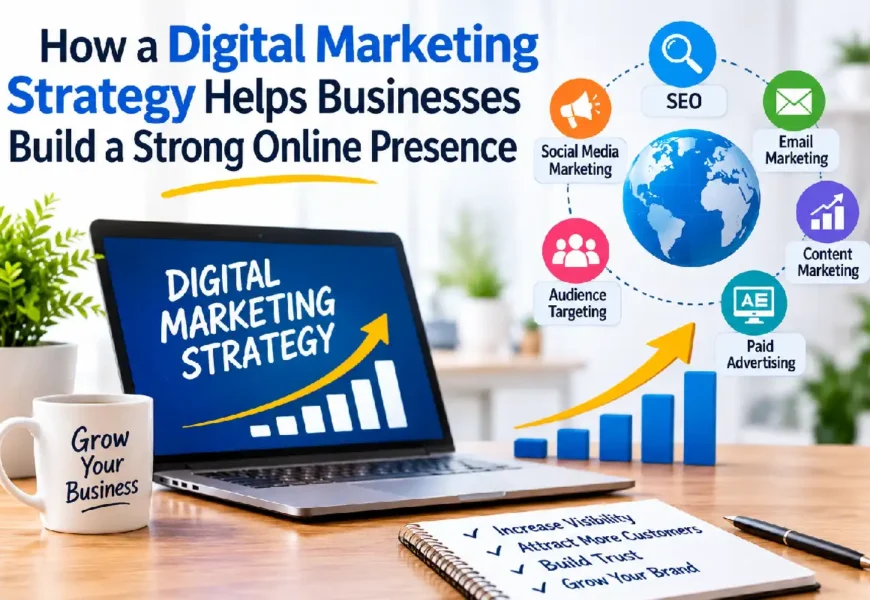
Building a strong online presence is essential for businesses that want to attract customers, increase brand awareness, and remain competitive. With more consumers using search engines, social media, and online platforms to discover products and services, businesses need a well-planned digital marketing strategy to reach their target audience.
A successful strategy involves more than simply creating a website or publishing social media posts. It requires a combination of search engine optimization (SEO), content marketing, social media engagement, and performance analysis to achieve sustainable business growth.
Understanding the Importance of Digital Marketing
Digital marketing allows businesses to connect with potential customers through multiple online channels. Unlike traditional advertising, digital campaigns offer opportunities to target specific audiences, measure results, and adjust strategies based on performance.
However, managing different marketing channels can become challenging, especially for small and growing businesses. Working with an experienced marketing agency can help businesses develop coordinated campaigns, improve their online visibility, and maintain consistent messaging across digital platforms.
The right marketing approach depends on business goals, customer behavior, industry competition, and available resources.
1. Improve Search Engine Visibility With SEO
Search engine optimization is one of the most important components of a digital marketing strategy. It helps websites become more accessible to users searching for relevant products, services, or information.
An effective SEO strategy generally includes:
- Keyword research: Identifying relevant search terms that potential customers use.
- On-page optimization: Improving titles, headings, content, and internal links.
- Technical SEO: Ensuring websites load efficiently, work on mobile devices, and can be crawled by search engines.
- Content optimization: Creating useful information that addresses search intent.
- Local SEO: Improving visibility for businesses serving specific geographic locations.
SEO requires consistent effort because search behavior, competition, and search engine systems continue to evolve. Businesses that regularly review and improve their websites can build stronger foundations for long-term organic visibility.
2. Build Customer Trust Through Content Marketing
Content marketing helps businesses educate their audiences while establishing credibility within their industries.
Instead of focusing entirely on promotional messages, businesses can publish helpful articles, guides, tutorials, case studies, and frequently asked questions.
For example, a software company might publish articles explaining how its technology solves common workplace challenges. Similarly, a retail business could create product comparison guides to help customers make informed purchasing decisions.
High-quality content can support multiple marketing objectives, including organic traffic growth, customer engagement, and lead generation.
To maintain consistency, businesses should develop a content calendar based on audience interests, relevant keywords, and seasonal opportunities.
3. Strengthen Brand Awareness Through Social Media
Social media platforms provide opportunities for businesses to communicate directly with their audiences.
Platforms such as LinkedIn, Instagram, Facebook, and YouTube serve different purposes depending on the business and its target customers.
For example, LinkedIn may be suitable for B2B networking and professional insights, while Instagram can help visually focused businesses showcase products and brand experiences.
An effective social media strategy should focus on:
- Publishing relevant and engaging content.
- Maintaining a consistent brand identity.
- Responding to customer questions and feedback.
- Sharing educational and informative resources.
- Monitoring engagement and audience preferences.
Rather than maintaining an active presence on every platform, businesses should prioritize channels where their potential customers are most likely to engage.
4. Use Paid Advertising to Reach Targeted Audiences
While organic marketing supports long-term growth, paid advertising can help businesses reach potential customers more quickly.
Google Ads and social media advertising platforms allow marketers to target audiences based on factors such as search intent, interests, location, and demographics.
However, successful advertising requires careful planning and continuous optimization.
Businesses should establish clear campaign objectives, create relevant advertisements, and direct visitors to landing pages that match their expectations.
Tracking conversions, cost per acquisition, and return on advertising spend can help businesses understand whether their campaigns are producing valuable results.
5. Measure Performance and Improve Marketing Decisions
One of the greatest advantages of digital marketing is the ability to evaluate campaign performance using measurable data.
Tools such as Google Analytics and Google Search Console provide insights into website traffic, user behavior, search visibility, and conversions.
Businesses can use these insights to identify successful marketing activities and areas requiring improvement.
Important performance indicators include organic search traffic, conversion rates, customer acquisition costs, engagement rates, and qualified leads.
Regular performance reviews allow businesses to make informed decisions rather than relying on assumptions.
6. Create a Consistent Experience Across Marketing Channels
Customers often interact with a business through multiple channels before making a purchasing decision.
Someone might discover a brand through a search engine, explore its social media profile, read customer reviews, and eventually visit its website.
Maintaining consistent messaging, branding, and customer experiences across these interactions helps establish familiarity and trust.
Businesses should ensure that their website content, advertising campaigns, email communications, and social media activities support the same overall marketing objectives.
An integrated approach also makes it easier to guide potential customers through different stages of the buying journey.
Conclusion
Developing a strong online presence requires a balanced digital marketing strategy that combines SEO, content creation, social media engagement, paid advertising, and ongoing performance analysis.
Businesses that understand their audiences and consistently deliver useful experiences are better positioned to improve visibility, strengthen customer relationships, and generate sustainable growth.
By setting realistic goals, selecting appropriate marketing channels, and regularly evaluating results, businesses can build a digital presence that supports their long-term success.
Syeda Yasmeen is a Marketing & Digital Business Writer at MarketingInno with 5 years of writing experience. She covers digital marketing, SEO, content strategy, branding, social media, online business, and emerging digital trends.
View Author Profile →
Sameena Begum is a health, technology, and digital content reviewer who reviews selected articles to help ensure that information is presented clearly, accurately, and responsibly.
View Reviewer Profile →