

Online odds-based games have evolved into complex digital systems that rely on probability, strategy, and statistical modeling. One term that appears in various discussions about such systems is vezgieclaptezims odds play. Although the term itself does not refer to any verified platform, people often use it when talking about digital odds engines or theoretical gambling-style models. This article explores how such systems work from an informational, technical, and risk-awareness perspective.
Visual Overview of Odds-Based Digital Systems
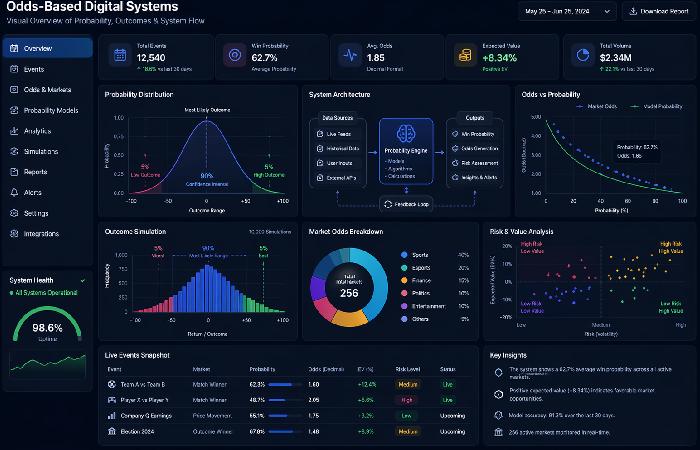
Modern odds-based systems combine mathematics, behavioral science, and computing algorithms. These systems simulate uncertainty using structured probability frameworks.
Core Components of Odds Systems
| Component | Function | Real-World Equivalent |
| RNG Engine | Generates randomness | Cryptographic systems |
| Probability Model | Assigns outcome likelihood | Statistical analysis |
| Risk Engine | Evaluates loss/gain | Financial modeling |
| Data Tracker | Records results | Analytics dashboards |
- Odds systems are mathematical, not emotional
- RNG ensures unpredictability
- Long-term outcomes differ from short-term results
What Is Vezgieclaptezims?
In general discussions, what is vezgieclaptezims refers to an odds-calculation framework used to simulate risk, expected value, and outcome probabilities. It isn’t tied to a confirmed platform but rather serves as a placeholder term for how online odds-play mechanics can function.
These systems analyze:
- Probability distributions
- Player decisions
- Random number generation (RNG)
- Buy-in thresholds
- Outcome ranges
Its purpose is often educational — helping learners understand the mechanics behind odds-driven digital games.
What Is Vezgieclaptezims Odds Play?
Vezgieclaptezims Odds Play is an approach to odds-based decision-making that emphasizes probability, pattern recognition and risk calculated, and uses strategy as its key decision-making tool. Instead of just purely being guided by chance, it focuses on comprehending odds, timing, and strategic positioning in order to impact results.
It is often discussed in contexts involving:
- Predictive analysis
- Risk–reward evaluation
- Strategic gameplay or simulations
- Decision systems driven by probability
How Vezgieclaptezims Odds Play Works
| Step | Process | What It Involves | Purpose |
| 1 | Odds Evaluation | Reviewing available odds or probabilities | Understand chances before taking action |
| 2 | Risk Analysis | Measuring possible loss vs potential gain | Avoid high-risk, low-reward plays |
| 3 | Strategy Selection | Choosing a predefined odds-based approach | Maintain consistency and discipline |
| 4 | Timing Decision | Identifying the best moment to act | Improve probability of favorable outcomes |
| 5 | Execution | Placing the play based on analysis | Reduce emotional or impulsive choices |
| 6 | Outcome Tracking | Recording results of each play | Learn from successes and failures |
| 7 | Strategy Adjustment | Refining methods using past data | Improve long-term performance |
| 8 | Repeat Cycle | Applying the process again | Build sustainable, logic-driven results |
Benefits of Using an Odds Play Approach
| Benefit | What It Means | Why It’s Important |
| Strategic Discipline | Follows predefined rules | Prevents overreacting to short-term losses |
| Adaptability | Strategies can evolve with new data | Stays effective in changing conditions |
| Better Risk Control | Loss limits are defined in advance | Helps protect resources over time |
| Outcome Awareness | Tracks results to refine strategy | Continuous improvement over time |
| Reduced Reliance on Luck | Outcomes depend more on analysis | Encourages smarter play |
| Enhanced Analytical Skills | Regular odds analysis sharpens thinking | Builds logical and data-driven habits |
| Long-Term Performance Focus | Emphasizes gradual gains | Supports sustainable success |
| Informed Decision-Making | Choices are based on probability, not guesswork | Reduces impulsive or emotional actions |
| Improved Consistency | Uses repeatable strategies | Delivers steadier long-term results |
| Greater Confidence | Clear reasoning behind each decision | Increases trust in your own approach |
Types of Odds-Based Digital Systems Worldwide
| System Type | Primary Use | Common Regions |
| Probability Simulators | Education & research | USA, EU |
| RNG-Based Models | Gaming simulations | Global |
| Risk Modeling Engines | Finance & statistics | USA, Asia |
| Game-Theory Simulators | Strategy training | Europe |
| Odds Visualization Tools | Learning probability | Global |
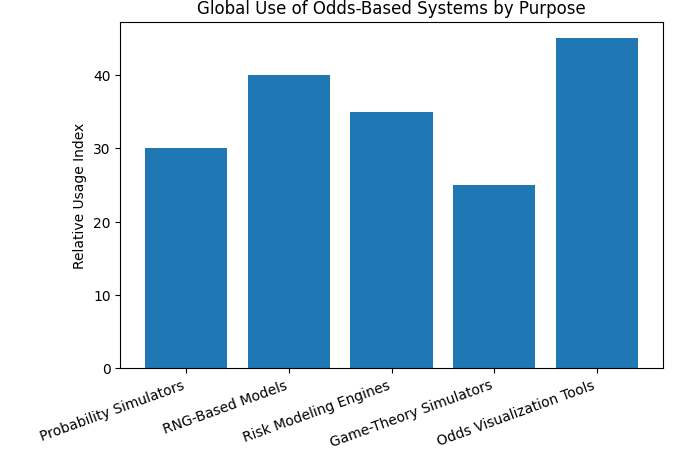
Global Use of Odds-Based Systems by Purpose
Across the world, odds-based systems are widely used for education, simulation, and behavioral analysis—not just gaming.
Mathematical Foundations Behind Odds Play Models
Core Mathematical Components Used in Odds Systems
| Component | Description | Purpose |
| Probability Distribution | Likelihood of outcomes | Predict outcome ranges |
| Random Number Generator (RNG) | Ensures randomness | Prevents predictability |
| Expected Value (EV) | Average long-term result | Risk assessment |
| Variance | Outcome fluctuation | Volatility measurement |
| House Edge (Theoretical) | System advantage | Sustainability modeling |
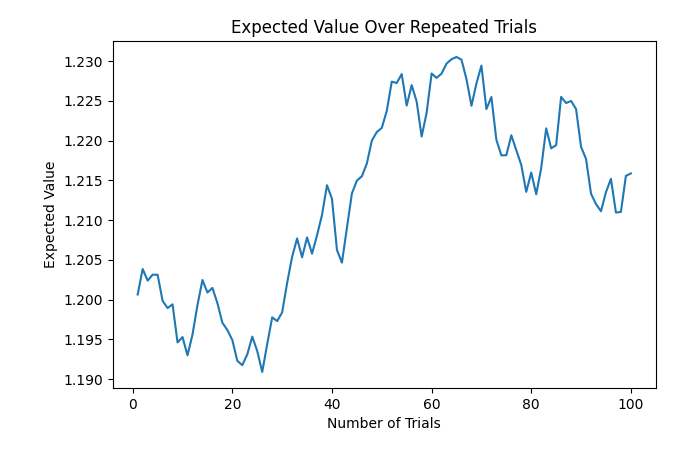
Expected Value Over Repeated Trials
Odds-play frameworks like vezgieclaptezims are modeled using standard probability theory used worldwide in statistics and finance.
Deep Dive into Expected Value and Variance
EV Examples
| Scenario | Win Probability | Payout | EV |
| Case 1 | 50% | 2x | Neutral |
| Case 2 | 40% | 3x | Positive |
| Case 3 | 60% | 1.5x | Negative |
Expected Value (EV) determines whether a strategy is profitable over time, while variance explains fluctuations in outcomes.
https://mealtop.co.uk/vezgieclaptezims-odds-play/
How Buy-In Models Work
Terms like vezgieclaptezims buy in or buy in vezgieclaptezims usually describe the risk-entry amount required in simulated odds-play environments. A buy-in is the baseline amount a user must allocate before participating in any probability-based activity.
A buy vezgieclaptezims bankroll reference typically means:
- The hypothetical funds a user assigns
- How bankroll size affects decision-making
- Why bankroll management matters in risk-based models
Understanding these mechanisms helps students and analysts examine how real-world games structure participation thresholds.
Buy-In Structures and Bankroll Management (Global Analysis)
Buy-In Models Used in Odds-Based Systems
| Buy-In Type | Risk Level | Common Use Case |
| Fixed Buy-In | Low–Medium | Educational simulations |
| Variable Buy-In | Medium–High | Strategy modeling |
| Percentage-Based | Controlled | Bankroll studies |
| Tiered Entry | Adjustable | Game theory testing |
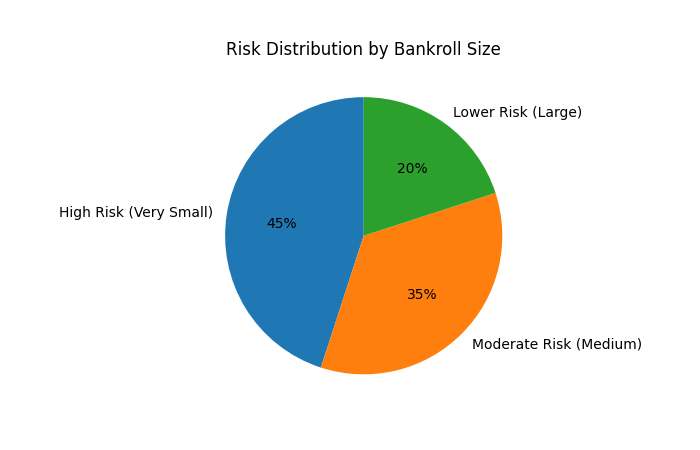
Bankroll Size vs Decision Stability
| Bankroll Size | Decision Quality | Risk Exposure |
| Very Small | Emotional | High |
| Medium | Balanced | Moderate |
| Large | Strategic | Lower |
Risk Distribution by Bankroll Size
Advanced Bankroll Management Strategies
Strategy Models
| Strategy | Description | Risk Level |
| Flat Betting | Same amount each time | Low |
| Percentage Model | % of bankroll | Medium |
| Progressive | Increase after loss | High |
| Reverse Strategy | Increase after win | Medium |
Expert Insights
- Bankroll discipline determines long-term survival
- Larger bankroll ≠ guaranteed success
- Emotional control is critical
Signup & Registration Models
References like vezgieclaptezims signup bonus or register bonu vezgieclaptezims usually appear in discussions about how many online systems use incentives to attract users. While this article does not endorse such strategies, it’s important to understand them from a theoretical standpoint.
Signup systems typically include:
- A registration process
- Account verification
- Risk disclosures
- Optional bonus structures in certain industries
This helps researchers evaluate how online platforms encourage engagement.
User Incentive Structures in Digital Odds Systems
Common Signup & Bonus Models (Industry Study)
| Incentive Type | Purpose | Risk Awareness Needed |
| Signup Bonus | User acquisition | High |
| Matching Credits | Engagement | Moderate |
| No-Deposit Credit | Trial usage | Very High |
| Tier Rewards | Retention | Medium |
Researchers study these structures to understand user psychology, not to promote participation.
How the Odds System Works
The central idea behind any odds-play system — including those modeled under the name vezgieclaptezims — revolves around mathematics.
Key components include:
- Probability Weighting – assigning chances to outcomes
- RNG Engines – ensuring unpredictability
- Expected Value (EV) – measuring long-term expectations
- Risk–Reward Curves – analyzing decision outcomes
- Odds systems aim to simulate uncertainty, which allows researchers to study risk-taking behavior and statistical decision-making.
Probability Flow in an Odds Play Engine
Step-by-Step Odds Calculation Process
| Step | Process | Outcome |
| 1 | Input variables | Risk level defined |
| 2 | RNG execution | Random outcome |
| 3 | Probability weighting | Odds applied |
| 4 | EV calculation | Expected result |
| 5 | Result output | Win/Loss simulation |
Vezgieclaptezims Odds Play Calculator
A Vezgieclaptezims odds play calculator refers to a tool that hypothetically analyzes:
- Win probability
- Loss probability
- Payout ratio
- Expected value
Such calculators help learners understand how mathematical models determine outcomes in probability-based games.
These calculators do not guarantee results — they merely demonstrate how probability theory functions.
Vezgieclaptezims Odds Play App
A hypothetical Vezgieclaptezims odds play app would be an educational application that simulates:
- Odds prediction
- Risk scenarios
- Game-theory decision branches
- Apps like these are typically used for research, math training, and modeling, not real-money activity.
Global Use of Simulation Apps for Probability Learning
Who Uses Odds Simulation Apps
| User Group | Purpose |
| Students | Learn probability |
| Researchers | Model behavior |
| Data Analysts | Test strategies |
| Educators | Teach statistics |
Global Use of Simulation Apps for Probability Learning
| User Group | Purpose |
| Students | Learn probability |
| Researchers | Model behavior |
| Data Analysts | Test strategies |
| Educators | Teach statistics |
Human Psychology vs Statistical Reality
Cognitive Biases
| Bias | Description | Impact |
| Gambler’s Fallacy | Expecting reversal | Poor decisions |
| Overconfidence | Ignoring risk | Loss increase |
| Pattern Illusion | Seeing false trends | Wrong strategy |
| Loss Aversion | Fear of losing | Emotional plays |
Statistical Risk vs Human Expectation Gap
Common Misunderstandings in Odds Systems
| Belief | Reality |
| Past losses increase win chance | False |
| RNG can be predicted | False |
| Short-term patterns matter | False |
| Large bankroll guarantees success | False |
Statistical Risk vs Human Expectation Gap
| Belief | Reality |
| Past losses increase win chance | False |
| RNG can be predicted | False |
| Short-term patterns matter | False |
| Large bankroll guarantees success | False |
Responsible Use & Risk Awareness
Any odds-based system carries inherent risks when used outside educational contexts. It’s important to understand:
- Odds always favor the system, not the user
- Buy-ins can lead to losses
- RNG prevents predictable outcomes
- Probability does not guarantee short-term results
- Always approach such systems analytically, not financially.
Global Regulatory & Ethical Perspective
How Regions View Odds-Based Systems
| Region | Regulatory Focus |
| USA | Consumer protection |
| EU | Transparency |
| Asia | Access control |
| Global Research | Ethical modeling |
Global Regulatory & Ethical Perspective
| Region | Regulatory Focus |
| USA | Consumer protection |
| EU | Transparency |
| Asia | Access control |
| Global Research | Ethical modeling |
Real-World Applications Beyond Gaming
Industry Use Cases
| Industry | Application |
| Finance | Risk modeling |
| Insurance | Premium calculation |
| AI Systems | Predictive modeling |
| Education | Teaching probability |
Steps to Use an Odds-Play Framework Effectively
1) Define Your Objective First
Decide what you’re optimizing for:
- Learning probability concepts
- Testing a strategy
- Simulating long-term outcomes
If you don’t define the goal, you’ll chase short-term results and misread the system.
2) Set a Fixed “Bankroll” (Even in Simulations)
- Choose a total amount (real or simulated)
- Split it into units (e.g., 100 units total)
- Rule: Never risk more than 1–5% of your bankroll per decision.
3) Evaluate the Odds (Not Just the Outcome)
Before any decision:
- What is the win probability?
- What is the payout ratio?
- Does it create positive expected value (EV)?
4) Use a Consistent Strategy Model
Pick one approach and stick to it:
| Strategy | How It Works | When to Use |
| Flat Betting | Same stake every time | Beginners |
| Percentage | % of bankroll | Balanced control |
| Value-Based | Bet only when EV > 0 | Advanced users |
5) Time Your Decisions (But Don’t Overthink Patterns)
Timing matters only in terms of:
- Entering when conditions match your rules
- Avoiding impulsive decisions
- Not about “streaks” or “due wins” (those are illusions)
6) Track Every Outcome
Maintain a simple log:
| Attempt | Stake | Outcome | Profit/Loss | Notes |
This helps you:
- Identify mistakes
- Improve strategy
- Remove emotional bias
7) Adjust Strategy Based on Data (Not Feelings)
After enough trials:
- Check win rate vs expected probability
- Compare actual vs expected value
- Modify only if data supports it
8) Repeat with Discipline
Consistency beats randomness:
- Same rules
- Same risk limits
- Same evaluation method
Smart “Tricks”
Focus on Expected Value (EV)
- If EV is negative, long-term loss is guaranteed.
Think in Series, Not Single Outcomes
- One result means nothing
- 100+ trials show the truth
Control Risk First, Profit Second
- Survival = ability to continue
- Over-risking = quick failure
Ignore Short-Term Patterns
Common myth:
- “I lost 5 times, next must win”
Reality:
- Each event is independent
Use Small Stakes Early
- Test strategy safely
- Learn without heavy loss
Predefine Stop Rules
- Stop-loss limit (e.g., -20%)
- Profit cap (lock gains)
Common Mistakes to Avoid
| Mistake | Why It’s Dangerous |
| Chasing losses | Leads to bigger losses |
| Increasing stake emotionally | Breaks strategy |
| Believing patterns | RNG has no memory |
| Ignoring EV | Guarantees long-term loss |
| No tracking | No improvement possible |
Simple Workflow Summary
- Set bankroll
- Choose strategy
- Evaluate odds (EV)
- Place controlled decision
- Record outcome
- Review after multiple trials
- Adjust logically
Final Reality Check
- Odds systems are mathematical simulations, not prediction machines
- You can improve decisions—but you cannot eliminate risk
- The goal is better thinking, not guaranteed winning
Final Thoughts on Vezgieclaptezims Odds Play
The play Vezgieclaptezims Odds Play. The idea of vezgieclaptezims odds play is an imaginary platform but a conceptual framework that is used to understand how systems that run on probabilities can be found in the world. Through insight into RNG mechanics, expected value, bankroll strategies, and psychological biases, users can learn more about decision-making in the face of uncertainty.
Such systems should be viewed as educational resources, rather than monetary ones. Their true worth is to educate on the interaction of randomness, risk, and logic within complex digital spaces.